Online Progress Meeting
13:00 CET · Online
The STEaiM CT consortium will meet online for a progress meeting focusing on the Handbook for Teacher Educators, sharing experiences with the AI Tutor, and project reporting.
Erasmus+ Cooperation Partnership in Higher Education (2025–2028)
Welcome to the STEaiM CT, an Erasmus+ Cooperation Partnership in Higher Education (2025–2028) that brings together universities from Slovakia, Austria, Spain, Italy and Portugal to strengthen the preparation of future STEM teachers for the digital era.
The project develops a university course and open educational resources that embed computational thinking in STEM teaching and support student teachers with AI-enhanced tools. At its core is the Study–Plan–Teach–Reflect–Report framework, guiding pre-service teachers from curriculum study and lesson design to classroom implementation and professional reflection, complemented by an AI Tutor and an online community forum for peer and expert support.
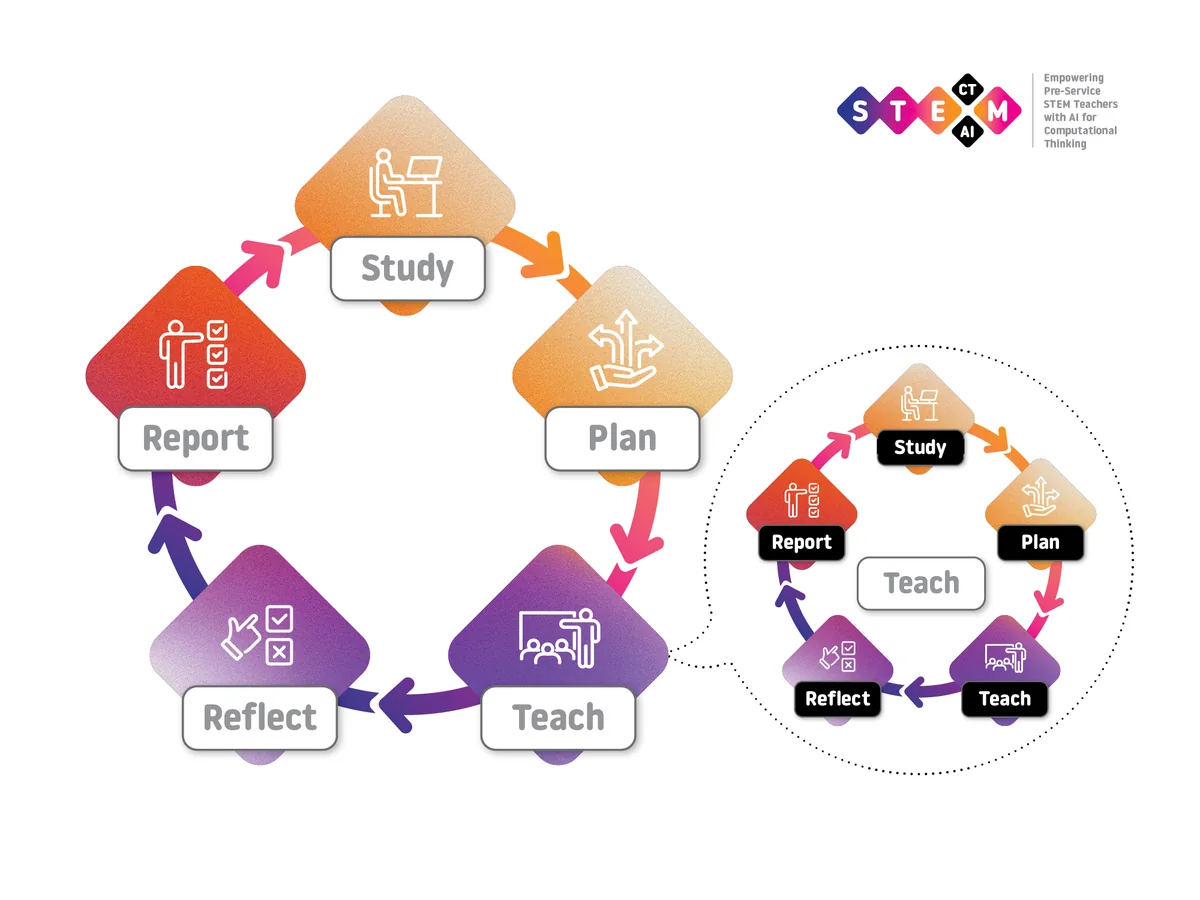
The five stages form a cycle: after Report, the cycle starts again with Study. The Teach stage itself follows the same Study–Plan–Teach–Reflect–Report cycle.
13:00 CET · Online
The STEaiM CT consortium will meet online for a progress meeting focusing on the Handbook for Teacher Educators, sharing experiences with the AI Tutor, and project reporting.
Online
–
Linz, Austria
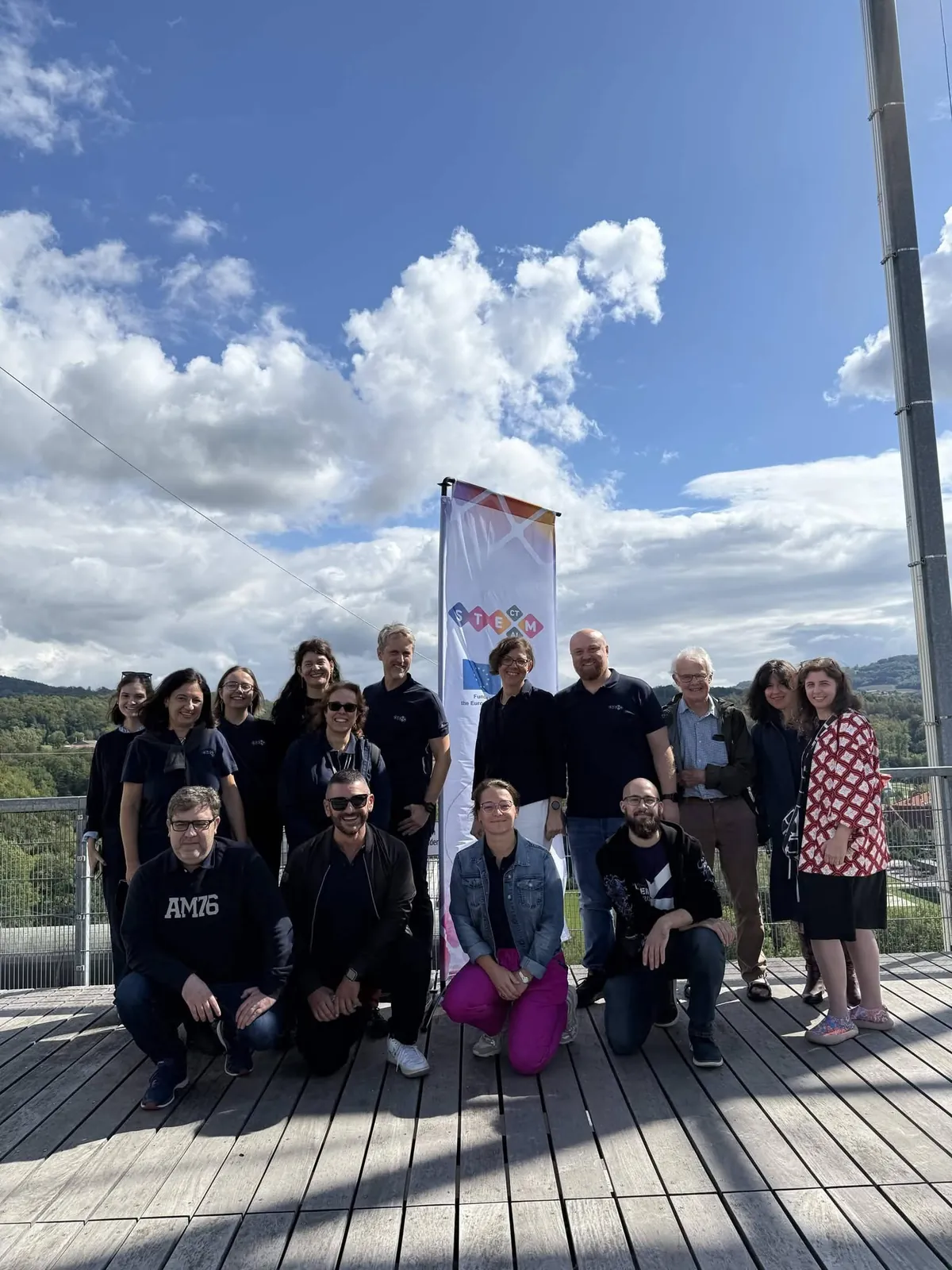
The STEaiM CT annual project meeting took place on 14–15 September 2026 at Johannes Kepler University Linz. The consortium discussed the project objectives, the next project steps, evaluation, course implementation and the dissemination strategy. Hosted by Johannes Kepler University Linz (JKU), the meeting brought together partners from Slovakia, Austria, Spain, Italy, and Portugal. During the meeting, partners reviewed the activities carried out so far and discussed the next stages of project implementation. Key topics included the structure and content of the Handbook for pre-service teachers, STEM activities developed by the partner institutions, course implementation and evaluation, dissemination activities, and further development of project outputs. The meeting also included hands-on testing of the current version of the AI Tutor using partners’ own lesson plans. The international team then presented the project's idea, research and first outcomes, including the AI Tutor and a draft of the project handbook, at the fifth MEDA conference (Mathematics Education in the Digital Age, 26th ERME Topic Conference), held at JKU Linz on 15–18 September 2026. Three posters and one paper were presented. Team from Constantine the Philosopher University in Nitra (Slovakia) contributed with poster about Slovak experience with implementation of the designed course, colleagues from Università di Bari Aldo Moro (Italy) in collaboration with Universidade NOVA de Lisboa (Portugal) presented the current state of the handbook for future teachers and Universidad de Cantabria (Spain) elaborated on future teachers’ understanding of computational thinking. The collaboration between Slovak and Austrian team led to paper explaining the principles, objectives and planned deliverables of the project.
Online
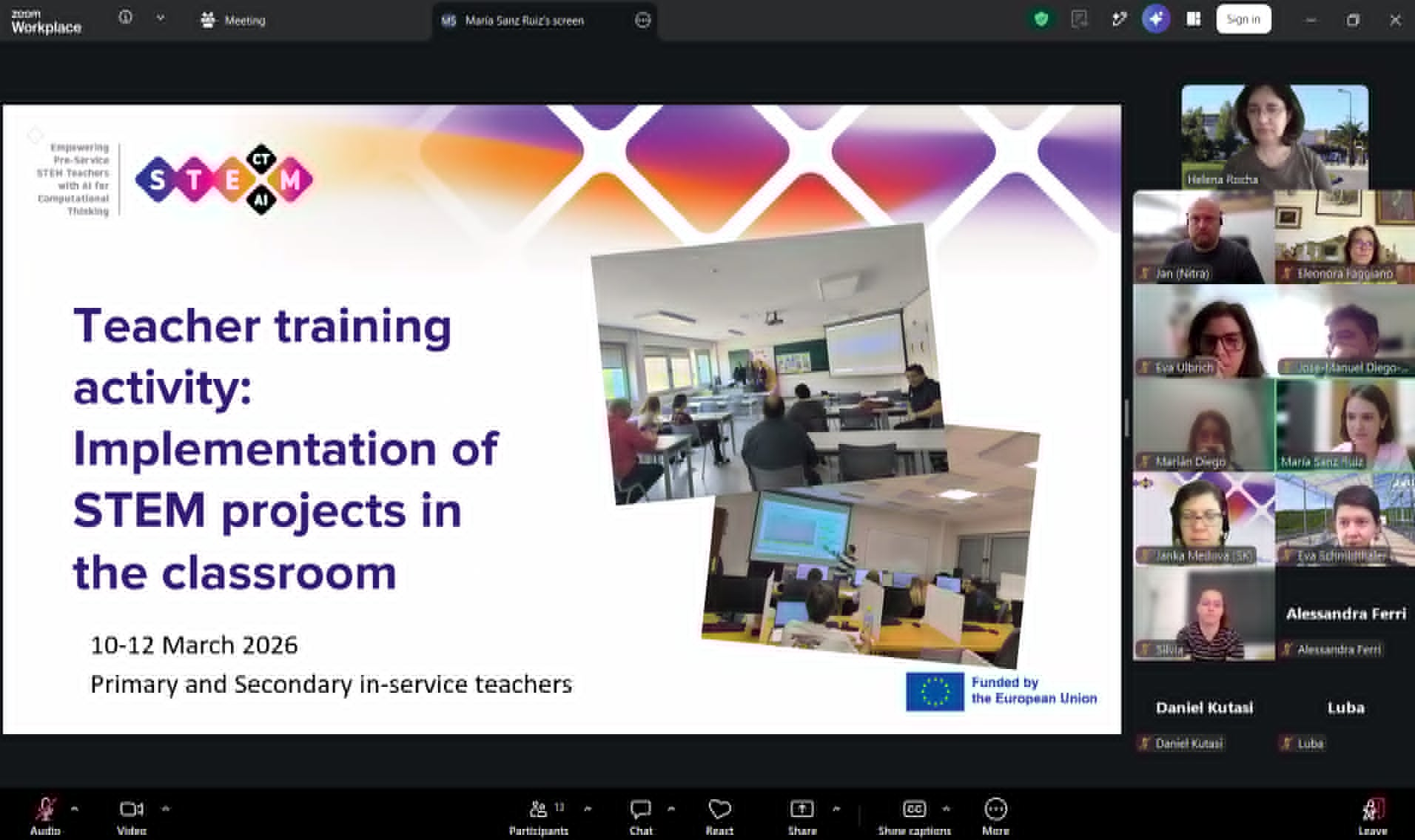
On 17 June 2026, the STEaiM CT consortium held an online progress meeting to review the current state of the project and coordinate upcoming activities. Partners reported progress within individual work packages and shared experiences from the pilot implementation carried out during the spring semester. The discussion provided valuable insights for the further development of project outputs. A substantial part of the meeting focused on the Handbook for Future Teachers. The consortium was also presented with the current version of the AI Tutor, based on the Mistral large language model. The discussion focused on its potential to support pre-service STEM teachers throughout the Study–Plan–Teach–Reflect–Report cycle and on future improvements before the next implementation phase. The meeting concluded with an agreement on the next steps and priorities for the coming months.
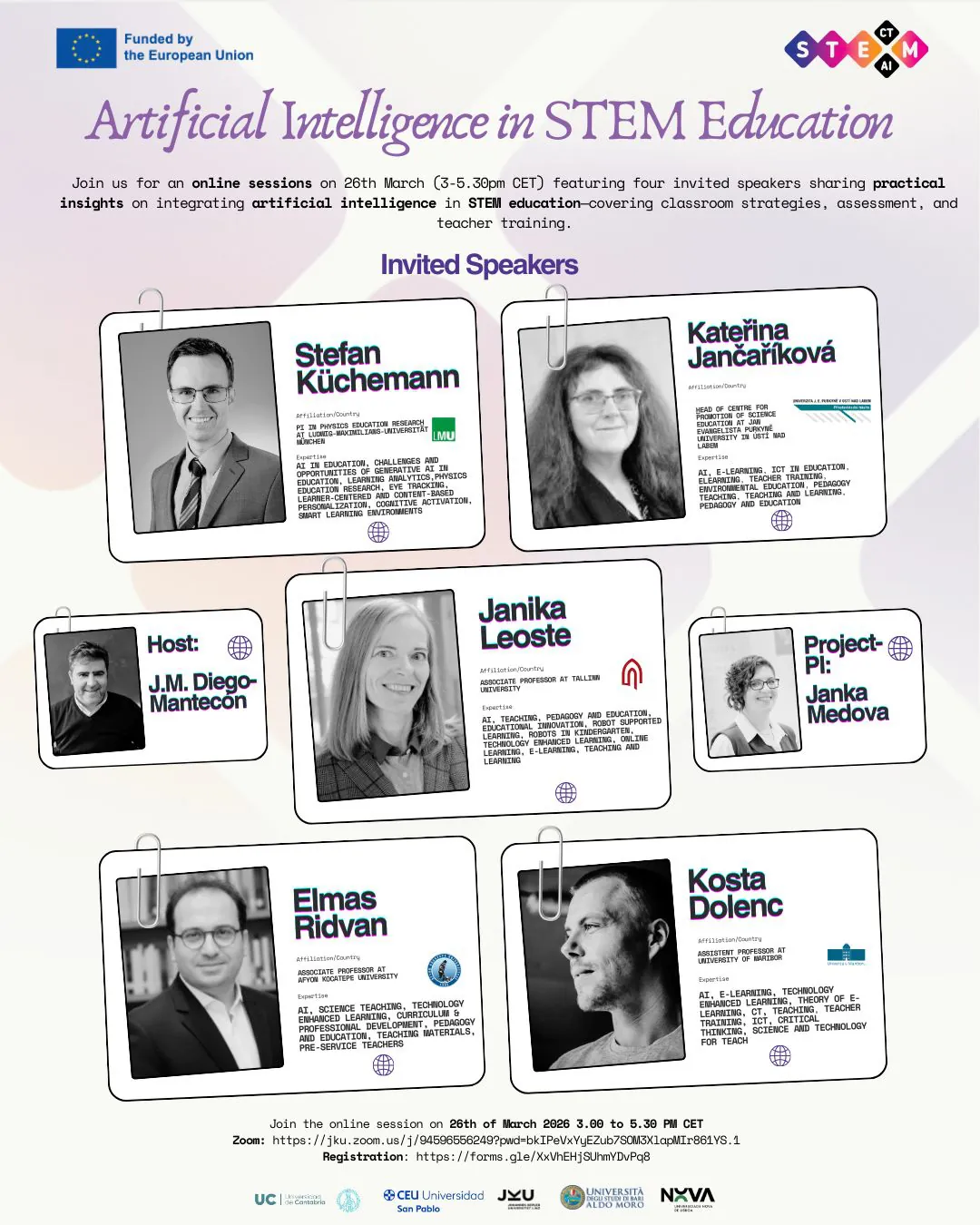
Online (Zoom)
An online session on integrating artificial intelligence (AI) into STEM education. The session featured practical AI strategies and classroom examples from primary to secondary level, AI tool-supported activities for education, and assessment approaches for AI skills, followed by a Q&A and panel discussion.